




Hobbies as a Quiet Force for Integration
Share your hobby, share your culture.
Becoming part of a new society means more than living in a country, finding a job, or managing daily needs. True integration begins when people feel visible, valued, and connected to the place they live in. International research agrees. The OECD now measures integration across dozens of indicators: not only work and income, but also living conditions, civic engagement, and social connection (OECD, Indicators of Immigrant Integration 2023: Settling In). Belonging is built across many parts of life, and a surprising amount of it grows through everyday human moments rather than formal systems: conversations, shared interests, personal stories, and hobbies.
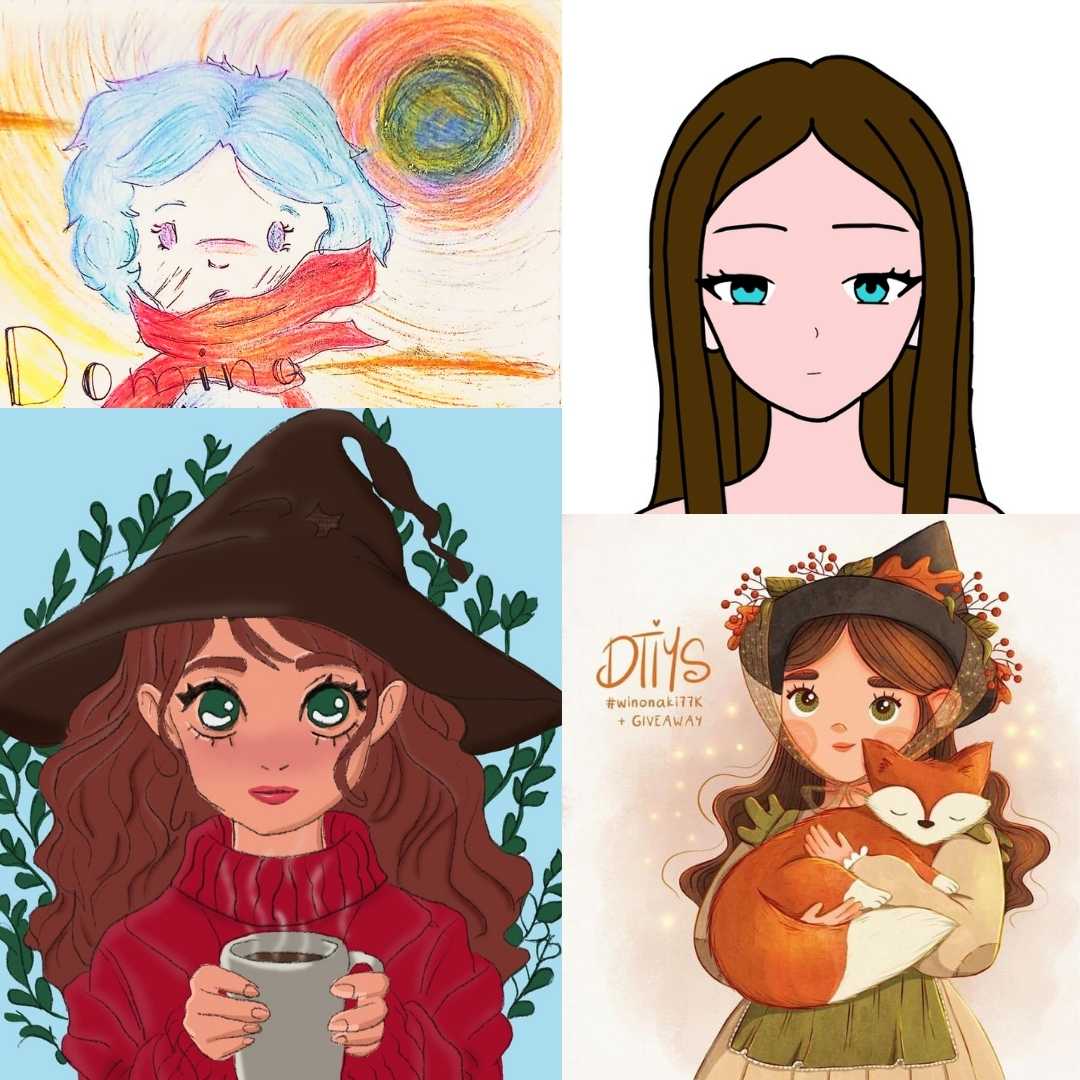
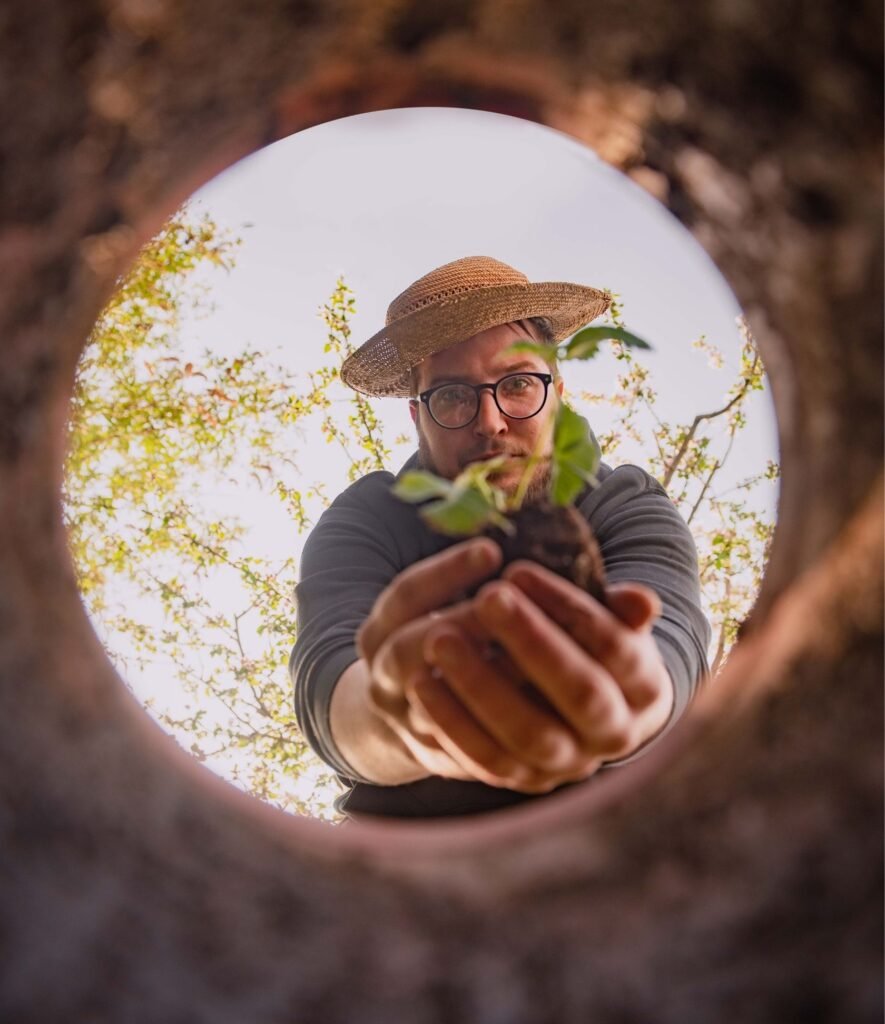
At first glance, hobbies may seem like simple leisure activities. In reality, when people talk about what they enjoy, share their skills, express their ideas, or come together around a common interest, they take an active step into social life. Cooking, music, sport, crafts, gardening, photography, literature, dance, games, and volunteering can all create meaningful spaces where people from different backgrounds meet, learn from one another, and gradually become part of the community.
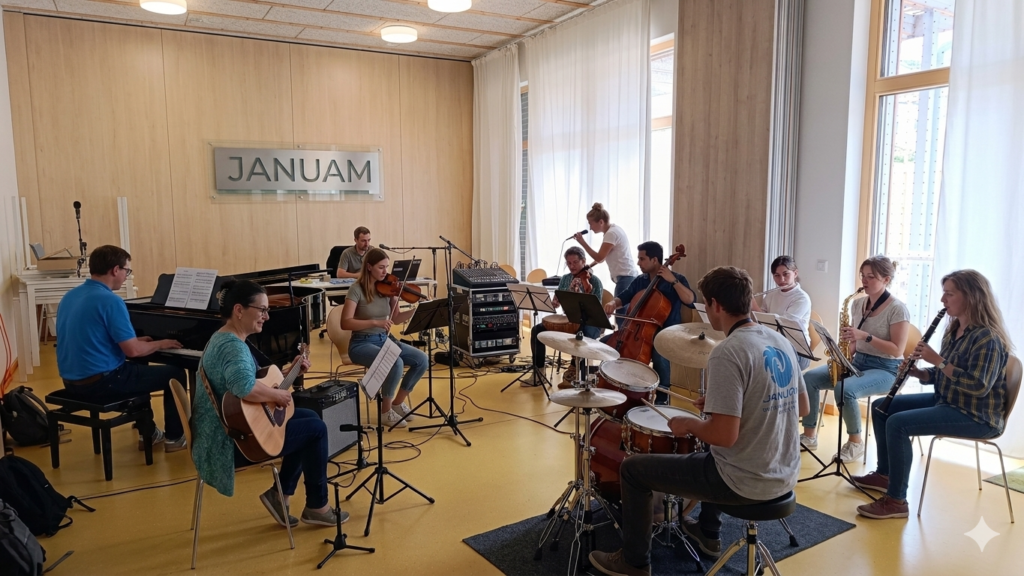
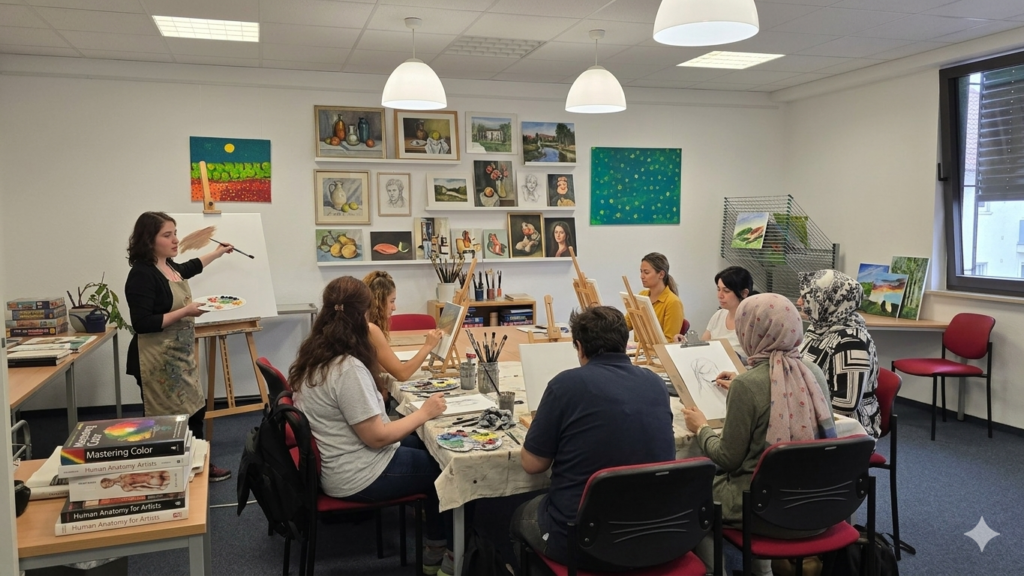
Shared interests build shared connections
One of the greatest challenges for people entering a new society is building a social network. A new language, unfamiliar rules, different habits, and unknown social codes can make people feel hesitant or isolated. Hobbies help by creating natural, low-pressure spaces for connection. In a hobby-based setting, people don’t meet only through questions like “Where are you from?” or “What do you do?” They meet through a shared interest: cooking the same meal, playing on the same team, singing the same song, working on the same craft. The connection that follows is more equal and more sincere.
This matters more than it might seem. The World Health Organization’s 2025 Commission on Social Connection estimates that loneliness is linked to around 871,000 deaths a year, roughly 100 every hour, and affects about one in six people worldwide. Shared activities are one of the most human responses to that. A study of immigrants’ leisure found that taking part in hobbies strengthens both social inclusion and life satisfaction. Decades of social science point the same way. Robert Putnam’s work on social capital (Bowling Alone, 2000) shows how shared pastimes build “bridging” ties across different groups, and a landmark review of more than 500 studies found that direct contact between groups usually reduces prejudice.
Language grows in real life
Language learning is one of the most important parts of integration. But language isn’t learned only from books, courses, or exams. It develops most deeply when it is used in real situations. In hobby-based environments, language becomes a natural need: people use it while explaining a recipe, sharing an idea, describing the rules of a game, or just talking during an activity.
These settings lower the fear of making mistakes. The goal isn’t to speak perfectly; it’s to take part, share, and do something together. That’s why a project like Darmstadt’s Internationaler Chor, an open singing group for people with refugee and migration backgrounds run by the Akademie für Tonkunst, works so well. People practise rhythm, sound, and new words together, and the shared voice quietly carries individual mistakes. Language stops being only a technical skill and becomes a way to build relationships.
Hobbies make skills visible
Hobbies can also open doors to working life. Many of them build transferable skills: discipline, creativity, communication, teamwork, problem-solving, patience, and self-organisation, all of which matter in a workplace. Being part of a sports team strengthens teamwork. Arts and crafts reward patience and persistence. Volunteering builds communication and organisational skills.
Hobby spaces also widen networks. As people meet others, they hear about job openings, training, volunteering roles, or professional advice. This is why integration works best when we treat it as multidimensional: social ties, confidence, and skills feed straight into economic participation, and they rarely grow in isolation from one another (OECD, 2023).
"I can do this": self-efficacy
People who are new to a society sometimes feel inadequate, foreign, or passive, and those feelings make integration harder. But when someone makes something, shares knowledge, contributes to a group, or is appreciated for it, their sense of self-efficacy grows. Self-efficacy is the belief in your own ability to act, learn, and succeed. As the psychologist Albert Bandura showed (Self-Efficacy, 1997), it is one of the strongest drivers of motivation and persistence.
Hobbies create exactly that space: a place to make, express, share, and contribute. Research on immigrants backs it up. People who take part in active and social leisure report higher self-efficacy and better social adjustment. Integration runs in both directions: a society opens its doors to the individual, and the individual comes to feel, “I can contribute to this place.”
From loneliness to connection: psychological well-being
Migration, relocation, and adapting to a new social system can be psychologically demanding. Separated from familiar surroundings, people may feel loneliness, stress, uncertainty, or exclusion. Hobbies can play a protective role. An enjoyable activity brings mental relief. A regular activity gives the day rhythm and structure. Doing something with others eases loneliness.
These benefits show up in the research. A study of a community garden built by Syrian refugees found that growing and cooking together built a community and strengthened social capital, well-being, and belonging. Psychological well-being is an invisible but essential foundation of integration: people who feel better are far more likely to get actively involved in society.
Becoming a participant, not just an observer
The aim of integration goes beyond simply existing in a society; it is about becoming an active and valued member of it. Through hobbies, people show who they are. When someone shares a traditional dish, introduces a piece of music, explains a childhood game, or presents a handmade object, cultural exchange happens, and it flows in both directions. Society stops being a place where differences merely sit side by side and becomes a place where people learn from one another.
This is more than a nice idea; institutions study it and invest in it. The research is cautious but encouraging: a 2025 systematic review in Sport Management Review weighed the evidence on using sport to support integration among migrants and other disadvantaged groups, and a large body of studies links shared, cooperative activity to greater interaction and a stronger sense of belonging. Public bodies act on it too. The European Commission funds projects that use sport for the inclusion of refugees, and in Germany the Federal Office for Migration and Refugees (BAMF) and the German Olympic Sports Confederation run Integration durch Sport, now working with around 2,200 clubs on a budget of 11.4 million euros a year.
An honest word: belonging has to be built together
We don’t pretend the door is always open. A Europe-wide field experiment found that applicants with foreign-sounding names were measurably less likely to be invited to a trial session at amateur football clubs. Integration is a two-way street, and welcoming spaces don’t happen by accident. They are built on purpose. That is the work Januam wants to do: make the first step easier, and invite hosts and newcomers to meet each other halfway.
Januam's approach: share your hobby, express your ideas, pass on your culture
At Januam, we believe integration should not mean only adapting to a society, but becoming an active and valued part of it. So we invite people to talk about their hobbies, express their ideas, and share their experiences. Everyone has a story to tell, a skill to share, and something worth contributing.
A hobby can be the start of a simple conversation. That conversation can turn into a friendship, a lesson learned, more confidence, and a deeper sense of belonging. Through hobbies, people get to know one another not only through their identities, countries, or professions, but through their interests, talents, curiosity, and dreams. That makes for a more sincere, inclusive, and human foundation for integration.
Come and share your flow
We’d love to meet you in person.
Date & time: 30 June 2026, 6:00–7:30 p.m.
Venue: Januam, Rheinstraße 5, 64283 Darmstadt
Treffen: Gemeinsam Hobbys teilen und Gemeinschaft erleben
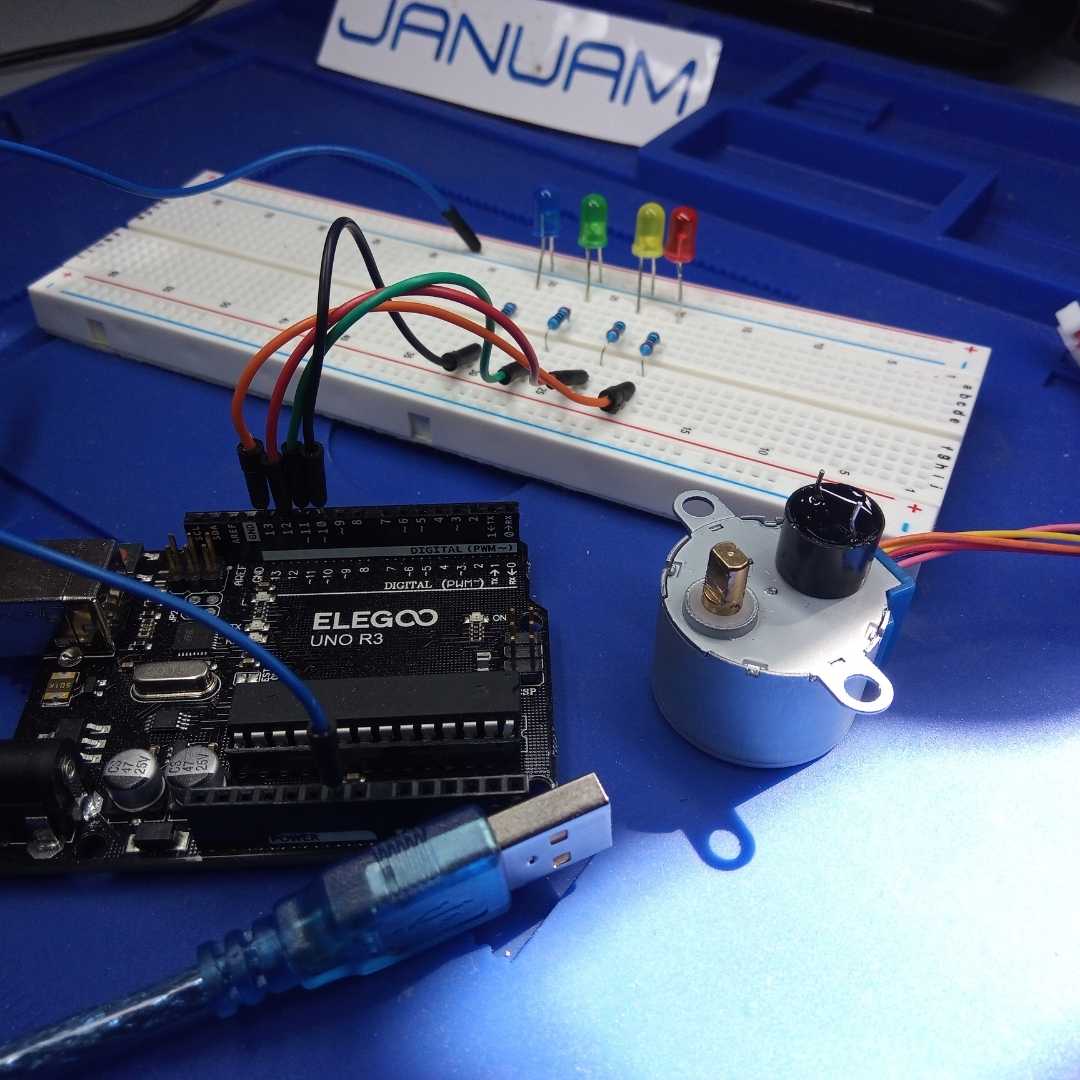
Cooking, music, gardening, art, photography, or simply sharing stories: come by, meet new people, and become part of our community.
“Set free your flow.”
Integration grows through sharing
Hobbies are quiet but powerful tools for integration. They support social participation, language learning, access to work, self-efficacy, psychological well-being, and active involvement in community life. When people share something they love, they do more than talk about themselves. They build bridges with others, and societies grow stronger across those bridges.
At Januam, we invite everyone to share their hobbies, ideas, experiences, and culture. Because integration is not only about living in the same place. It is about speaking together, creating together, learning together, and feeling that we belong together.
Sources
OECD/European Commission (2023). Indicators of Immigrant Integration 2023: Settling In. OECD Publishing. — https://www.oecd.org/en/publications/2023/06/indicators-of-immigrant-integration-2023_70d202c4.html
World Health Organization (2025). From loneliness to social connection: charting a path to healthier societies — Report of the WHO Commission on Social Connection. — https://www.who.int/groups/commission-on-social-connection
Lazcano, I., Madariaga, A., & Doistua, J. (2022). Leisure as a Space for Inclusion and the Improvement of Life Satisfaction of Immigrants. Journal of International Migration and Integration. — https://link.springer.com/article/10.1007/s12134-021-00917-y
Kim, J., Heo, J., Lee, I. H., & Kim, J. (2021). The Effects of Leisure Activities on Self-Efficacy and Social Adjustment (immigrants). International Journal of Environmental Research and Public Health. — https://pmc.ncbi.nlm.nih.gov/articles/PMC8394616/
Pettigrew, T. F., & Tropp, L. R. (2006). A Meta-Analytic Test of Intergroup Contact Theory. Journal of Personality and Social Psychology. — https://pubmed.ncbi.nlm.nih.gov/16737372/
Putnam, R. D. (2000). Bowling Alone: The Collapse and Revival of American Community. Simon & Schuster.
Bandura, A. (1997). Self-Efficacy: The Exercise of Control. W. H. Freeman.
Duan, Z., Hou, T., Liang, X., Kavussanu, M., & Chen, S. (2025). The use of sport for social integration amongst disadvantaged populations: a systematic review. Sport Management Review. — https://www.tandfonline.com/doi/full/10.1080/14413523.2025.2603799
Community garden developed by refugees from Syria — a sanctuary for social connection and well-being (2023). Wellbeing, Space and Society. — https://www.sciencedirect.com/science/article/pii/S2666558123000350
Gomez-Gonzalez, C., Nesseler, C., et al. “(Not) being granted the right to belong — Amateur football clubs in Germany” / “Mapping discrimination in Europe through a field experiment in amateur sport.” — https://journals.sagepub.com/doi/abs/10.1177/10126902211061303
Internationaler Chor, Akademie für Tonkunst Darmstadt (in cooperation with PaSo gGmbH). — https://akademie-fuer-tonkunst.de/neues-angebot-internationaler-chor/
European Commission. Sport as a tool for integration and social inclusion of refugees (Erasmus+ / EU pilot project). — https://sport.ec.europa.eu/node/161
Federal Office for Migration and Refugees (BAMF). Integration through Sport. — https://www.bamf.de/SharedDocs/Anlagen/EN/Integration/Integrationsprojekte/flyer-integration-durch-sport.pdf
SPRING project (EU-funded). Civic Participation, Sports, Arts and Leisure — overview of European research evidence. — https://integrationpractices.eu/details/civic-participation-sports-arts-and-leisure
Expert Council on Integration and Migration (SVR) — research on participation and integration in Germany. — https://www.svr-migration.de/
Ahmet writes for Januam gUG, a Darmstadt-based non-profit that strengthens social participation and integration through language, digital skills, and community programmes for people with migration backgrounds.
Connect on LinkedIn