








ENGLISH
An Inclusive Strategy for the Digital Decade
In 2026, digital participation is no longer a question of whether someone has an internet connection. It is a question of whether someone can take part in modern life. Applying for a residence permit, booking a doctor’s appointment, following a parliamentary debate, sending a job application, or signing a child up for school: each of these everyday acts now assumes a smartphone, a reliable connection, and the digital and AI skills to use them safely. For people who do not have these foundations, the gap between paperwork and participation grows wider every year.
At Januam, this gap is the reason our work exists. Our programs in Darmstadt and across Hesse — Deutsch4U, WIR Hessen Computer Basics, Connect 4 Change, CERV Immune 2 Infodemic, and our Digital Skills Courses — were built around one observation: language skills, digital competencies, and social inclusion belong together. None of them is enough on its own. Together, they open the door to education, employment, civic participation, and full belonging in a new home.
This article examines what the latest data, policy frameworks, and the practical experience of community organizations tell us about closing the digital divide in Germany and Europe. It draws on the International Telecommunication Union’s Facts and Figures 2025, the European Commission’s State of the Digital Decade 2025 report, UNESCO’s AI Competency Frameworks, DigComp 3.0, the Bitkom Digitale Teilhabe 2025 study, the German Accessibility Strengthening Act (BFSG), and the EU AI Act. It is structured around five connected questions:
- Overcoming the digital divide: Who is still left behind, and what helps to bring them online with dignity?
- Bringing digital competencies into focus: Which skills do people need now, and how do we teach them?
- Strengthening digital engagement: How does digital participation translate into civic participation?
- Making digitalization tangible everywhere: Where do people actually learn, practice, and build trust?
- AI literacy for all: What new competence does the AI age demand of every citizen?
"Today's digital divides are increasingly defined by speed, reliability, affordability, and skills." Doreen Bogdan-Martin, ITU Secretary-General, Facts and Figures 2025.
1. Overcoming the Digital Divide
The big numbers from the International Telecommunication Union are moving in the right direction. ITU counted six billion internet users in 2025, about 74 percent of the world’s population, with another 240 million people coming online in a single year. Yet behind that headline the picture splits sharply. In high-income countries, 5G now covers 84 percent of the population. In low-income countries it covers only 4 percent. A typical mobile user in a wealthy market consumes eight times more data each month than a user in a developing market. The new divide is no longer about access alone; it is about the quality, speed, and affordability of that access.
Europe looks fully connected on paper, and the qualitative gap inside the continent is still striking. In Germany, 96 percent of people aged 14 and over use the internet at least occasionally. Three quarters of those over 65 are now what Bitkom calls Silver Surfers. At the same time, 37 percent of Germans report feeling often overwhelmed by digital technology, 46 percent fear they cannot keep pace with change, and 16 percent say they would rather live in a world without digital technology altogether.
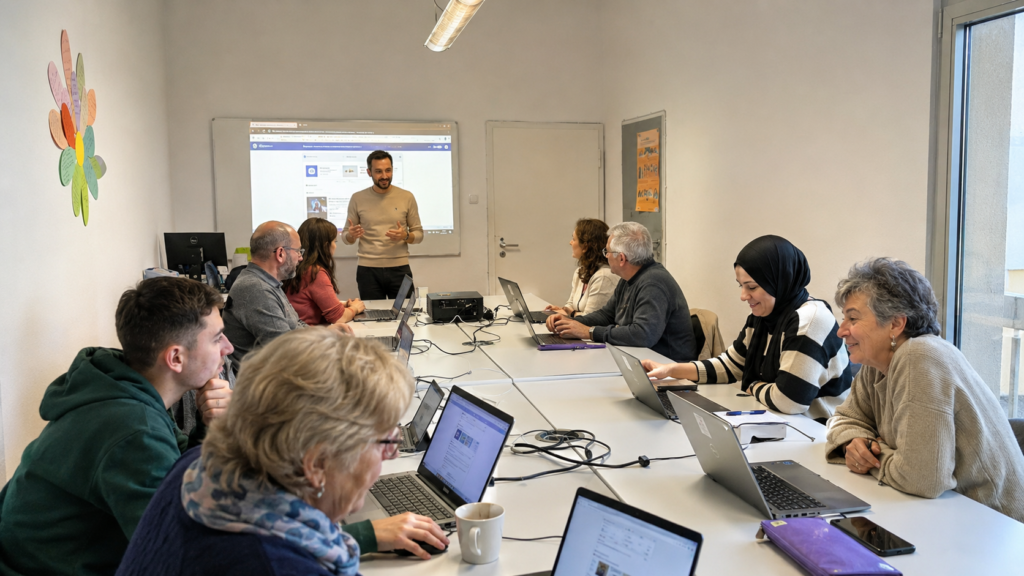
Table 1. The Global Divide at a Glance (ITU Facts and Figures 2025)
| Indicator | 2025 value | Notes |
|---|---|---|
Internet users worldwide |
6.0 bn (74 %) |
+240 m year on year |
Population still offline |
2.2 bn |
96 % live in low- and middle-income countries |
5G coverage, high-income countries |
84 % |
Versus 4 % in low-income countries |
5G subscriptions (share of mobile broadband) |
≈ 36 % |
First-ever ITU estimate |
Urban internet use |
85 % |
Urban-rural ratio: 1.1 in Europe vs. 2.6 in Africa |
Rural internet use, low-income countries |
14 % |
One in seven rural dwellers online |
Youth (15–24) internet use |
82 % |
Versus 72 % for the rest of the population |
Gender gap |
≈ 280 m fewer women online |
Gender parity score 0.92 |
Data consumption gap |
8× |
More mobile data in high- vs. low-income markets |
Source: International Telecommunication Union, Measuring Digital Development: Facts and Figures 2025, published 17 November 2025.
The German Picture: Structural Exclusion in a Connected Country
On paper, Germany is one of Europe’s most connected countries. The exclusion that remains is structural rather than universal. It concentrates among older women, people with disabilities, people on low incomes, people with low formal education, and people who have arrived in Germany recently and are still navigating a new language and a new administrative culture at the same time. Self-rated digital competence sits at 2.8 on the German school grading scale (1 best, 6 worst), and rises above 3.5 for the over-70s. Aktion Mensch estimates that approximately 30 percent of internet users require some form of digital accessibility, whether for reasons of disability, low literacy, or non-native language. A large share of the federal services that should be fully online still are not fully usable for people with cognitive or visual impairments, or for those who read German only at A2 level.
Table 2. Digital Participation in Germany (2024 and 2025)
| Indicator | Value | Source |
|---|---|---|
Germans 14+ using the internet (at least occasionally) |
96 % |
ARD/ZDF Medienstudie 2025 |
Adults 65+ online (Silver Surfers) |
75 % |
Bitkom 2025 |
Feel often overwhelmed by digital technology |
37 % |
DFA/Bitkom Digitaltag-Studie 2025 |
Afraid of not keeping pace with technology |
46 % |
DFA/Bitkom 2025 |
See digitalisation as opportunity for society |
88 % |
DFA/Bitkom 2025 |
Self-rated digital competence (school grade) |
2.8 |
Bitkom Digitale Teilhabe 2025 |
People with officially recognised severe disability |
7.8 million |
Statistisches Bundesamt |
EU adults with basic digital skills |
55.6 % (target 2030: 80 %) |
State of the Digital Decade 2025 |
Affordability Remains the Hardest Barrier
Across the European Union and the United Kingdom, broadband social tariffs look generous on paper and reach only a small share of eligible households. In Germany, the Deutsche Telekom Sozialtarif offers a €6.94 monthly call credit to people exempt from the broadcasting fee. The basic line fee of roughly €33 remains unchanged, which independent consumer organizations such as Verbraucherzentrale and teltarif.de describe as offering questionable real value. In the United Kingdom, BT Home Essentials, Sky Basics, and Vodafone Essentials Broadband price decent connections at £12 to £20 per month, but only about one eligible household in twenty takes them up, because the eligibility checks are slow and the marketing is weak. For newcomers to Germany, additional barriers compound the affordability problem: SCHUFA scores, bank account requirements, two-year contracts, and contract terms only in German all make even the simplest internet connection a serious hurdle.
Table 3. How Affordability Schemes Compare
| Scheme | Eligibility | Benefit | Caveats |
|---|---|---|---|
Telekom Sozialtarif 1 (DE) |
Exempt from / reduced broadcasting fee |
€6.94/month call credit |
Does not reduce the basic line fee |
Telekom Sozialtarif 2 (DE) |
Severe disability ≥90 % with BI or GI markers |
€8.72/month call credit |
Same restrictions |
Bürgergeld (DE) |
Recipients of basic income |
€50.35 communications allowance in regelbedarf |
Not tied to a contract |
UK social tariffs |
Universal Credit, Pension Credit, JSA, ESA |
£12 to £20/month for 30 to 67 Mbit/s broadband |
Take-up ≈5 % of eligible households |
Zero-rating (Global South) |
All users |
Free access to a curated subset of sites |
Net-neutrality concerns |
Practical Steps That Work
6. Tie social benefits to a real broadband entitlement. Social tariffs should reduce the basic monthly fee, not just call minutes.
7. Map digital exclusion hotspots at municipal level. Place free public Wi-Fi, device-lending libraries, and digital-assistant programs exactly where the gap is largest.
8. Treat affordability and accessibility as a single bundle. Accessibility multiplies the value of every connection; without it, infrastructure spending is wasted on the people who need it most.
9. Offer information in multiple languages. Sozialtarif eligibility, public Wi-Fi guides, and digital-assistant resources should be available in at least the main languages of the local migrant population, not only in German.
2. Bringing Digital Competencies into Focus
Connectivity without competence is only half a solution. The European Commission’s mid-term review of the Digital Decade, published in June 2025, did not soften the message: Europe is in a skills emergency. Only 55.6 percent of EU adults have basic digital skills, against the 80 percent target set for 2030. Women still make up just 19.5 percent of ICT specialists, a share that has been flat for three years. Meanwhile, 92 percent of EU workers use digital technologies every day at work, 30 percent already use AI systems in their roles, and only 15 percent have ever received AI training. The skills required to participate fully in the digital economy are advancing faster than the systems designed to teach them.
The European Commission’s Joint Research Centre responded on 11 November 2025 with DigComp 3.0, the fifth version of the European Digital Competence Framework for Citizens. The most important change is structural rather than cosmetic. For the first time, AI competence is woven systematically into all 21 individual competences, instead of being treated as a separate annex. This recognizes that AI is no longer a specialist field; it is part of how citizens search for information, communicate, create content, protect themselves, and solve problems.
Table 4. DigComp 3.0 at a Glance
| Competence area | Number of competences | What is new in 3.0 |
|---|---|---|
Information and data literacy |
3 |
AI-assisted search and source evaluation embedded |
Communication and collaboration |
6 |
Digital tools for civic participation strengthened |
Digital content creation |
4 |
Generative-AI content and AI-supported programming |
Safety |
4 |
Cybersecurity, digital wellbeing, data protection, environmental impact |
Problem solving |
4 |
Identifying competence gaps and critical thinking with AI |
TOTAL |
21 competences · 4 proficiency levels · >500 learning outcomes |
Available as spreadsheet and linked open data |
Table 5. Digital Decade 2030 Targets versus Reality
| Target by 2030 | Status 2024/24 | Gap |
|---|---|---|
80 % of adults with basic digital skills |
55.6 % |
–24.4 pp |
20 million ICT specialists |
≈10.5 m, 19.5 % women |
Roughly half-way |
100 % key public services online |
Steady progress; cross-border gaps remain |
Uneven |
75 % of businesses using AI / cloud / big data |
Improving; SMEs still lag |
Far from target |
EU share of global semiconductors to 20 % |
<10 % in 2023 |
Large gap |
Gigabit and 5G everywhere |
5G basic coverage improving; |
Uneven |
German Competence Gaps and Levers That Work
Bitkom’s Digitale Teilhabe 2025 study, a representative survey of 1,003 citizens aged 16 and over, finds that two thirds of Germans want more digital participation in everyday life. Only three in ten feel adequately supported in acquiring the necessary skills. BAGSO, the umbrella organization of senior citizens’ associations, and the Cologne Center for Ethics, Rights, Economics and Social Sciences of Health (Ceres) document a familiar pattern: device cost, lack of a trusted teacher, accessibility limitations, and genuine fear of online fraud all hit the oldest cohort at the same time. Among newcomers to Germany, the obstacles are different but no less real: limited German vocabulary for technical terms, unfamiliar administrative processes, and the absence of a peer who has navigated the system before.
Germany has a number of structural answers that work, when they are funded and properly connected to the people who need them:
10. Volkshochschulen as universal adult educators. More than 850 adult-education centres carry the bulk of structured basic-skills work in Germany. The vhs.cloud platform and new AI-literacy modules build on a traditional catalogue that already reaches every district.
11. Mehrgenerationenhäuser as community hubs. Roughly 530 federally funded multi-generational community houses host intergenerational tablet cafés and informal learning groups that combine social space with practical coaching.
12. Specialist providers for specific audiences. BAGSO’s Digital-Kompass and Silver Tipps offer age-appropriate learning resources for older citizens. Januam’s programs in Darmstadt and across Hesse, including Deutsch4U for language acquisition, WIR Hessen Computer Basics for foundational digital skills, and our Digital Skills Courses, are designed for migrants and newcomers whose path to digital competence runs through German-language learning at the same time.
13. A national skills monitor and proactive outreach. Bitkom is calling for a national Weiterbildungsmonitor and the idea of digital street workers to reach adults outside school and the labour market, an approach already established in social work with young people.
How Januam's Programs Apply the DigComp Framework
DigComp 3.0 is a framework that works only if real organizations translate it into real courses. At Januam, the Digital Skills Courses are structured around DigComp’s five competence areas. Beginners learn information and data literacy by practising how to find official German government information online and check whether a website is trustworthy. Communication and collaboration are taught hand in hand with German conversation practice. Content creation includes simple tools that allow participants to produce CVs, school applications, and personal documents in formats accepted by German employers and authorities. Safety modules cover phishing, fraud aimed at newcomers, and the protection of personal data. Problem solving, the fifth area, is woven into every session: learning is structured around the everyday digital problems participants bring with them, from booking a Bürgeramt appointment to using an online appointment system at their child’s school.
3. Strengthening Digital Engagement
The Digital für alle alliance brings together 27 organizations from civil society, culture, science, business, and public administration. Every June, the alliance runs the national Digitaltag. In 2025, the sixth edition gathered around 2,000 actions across Germany under the motto Digitale Demokratie. Mitreden. Mitgestalten. Mitwirken., and was opened by federal digital minister Karsten Wildberger. Alongside the Digitaltag, the Preis für digitales Miteinander recognizes projects that use digital tools to broaden participation, with a prize of €5,000 per category. Civil-society organizations of every size are eligible, and the prize list reads like a map of practical answers to the digital divide.
Digital Sovereignty: The Foundation of Civic Engagement
A civic space in which citizens, NGOs, and small businesses can act independently online needs more than a social media presence. It needs open-source civic-tech platforms, infrastructure hosted within the European Union, end-to-end encryption, and a legal framework that protects civic actors from arbitrary platform decisions. Germany took a concrete step in February 2023, when the Gesetz zur Ermöglichung digitaler Mitgliederversammlungen im Vereinsrecht amended §32 of the German Civil Code (BGB) and explicitly allowed hybrid or fully virtual member assemblies in registered associations. With that single change, hundreds of thousands of Vereine were given the legal foundation to expand participation overnight. The Sovereign Tech Fund finances strategic open-source infrastructure, and organizations such as HIIG, betterplace lab, ichbinhier e. V., Wikimedia Deutschland, and CORRECTIV defend a digital commons that most people never notice until it is no longer there.
Community Resilience Against Disinformation
Engagement is only possible when citizens can trust what they see online. Disinformation, AI-generated content, and coordinated influence campaigns increasingly target the same communities that already face digital barriers. Januam’s webinar AI vs. Reality, Building Community Resilience Against Disinformation is one practical response to this challenge. Bringing together newcomers, educators, and volunteers, the webinar teaches participants how to recognize AI-generated text and images, how to verify a source, and how to respond to disinformation in family WhatsApp groups and community chats where it most often spreads. Programs of this kind, run by community organizations close to the people they serve, are the connective tissue between official policy frameworks and everyday digital life.
Civic Tech Beyond Germany
European examples show what is possible at scale. Decidim, the open-source participation platform developed in Barcelona, now powers more than 400 municipal and regional consultations across Europe. Consul Democracy, developed in Madrid, anchors participatory budgets from Buenos Aires to Athens. In the United States, FindIt Cambridge translates city services into a single search box for families, MAPLE (the Massachusetts Platform for Legislative Engagement) lets citizens comment on state bills, and MetroBoston DataCommon makes regional open data accessible to ordinary residents. None of these platforms is a moonshot. Each one demonstrates that well-designed civic technology can reduce the cost of participation by an order of magnitude and bring new groups of people into democratic life.
4. Making Digitalization Tangible Everywhere
Online tools alone cannot deliver digital participation. People learn, build confidence, and develop trust through places they can physically enter: libraries, community centres, makerspaces, schools, neighbourhood hubs, multi-generational houses, and local advice points. These spaces turn digitalization from an abstract policy agenda into a practical everyday experience. They are where someone learns to book an online appointment, scan a document, understand a public-service app, recognize a phishing message, or ask what a sensor in the street is actually doing.
This is why digital inclusion needs more than platforms. It needs trusted local spaces, trained facilitators, accessible devices, clear language, and public technology that citizens can understand. When digital infrastructure becomes visible, explainable, and open to questions, it stops feeling like a black box and starts becoming part of democratic life.
Transparent Public Technology: The DTPR Standard
When a city installs a traffic sensor or an air-quality monitor in a public place, who can a passer-by ask what it does? DTPR provides an open-source answer to this question: a visual icon system, QR codes, and standard signage that explain in plain language who operates a sensor, what data it collects, and how citizens can give feedback.
Boston was the first city in the United States to deploy DTPR. The Washington, DC Department of Transportation has added a Non-Identifiable Video taxonomy item to expand the standard. Pilots are now running in Innisfil in Ontario and in Angers Loire Métropole in France. Both the World Economic Forum and the American Planning Association have endorsed the approach as a model for trustworthy smart cities.
For European cities, the lesson is clear: smart-city infrastructure must be readable. Sensors, cameras, digital kiosks, data dashboards, and automated systems should not simply appear in public space without explanation. Citizens need to know what is being measured, why it is being measured, who is responsible, and how they can object, ask questions, or contribute.
VR, AR, and Digital Twins for Participation
Virtual reality, augmented reality, and digital twins can make planning and participation more concrete. Den Haag has piloted immersive virtual-reality consultations for area-development plans such as the Binckhorst quarter, allowing residents to walk through a proposed redevelopment before any decision is made. At European level, the CitiVERSE European Digital Infrastructure Consortium for Local Digital Twins was launched in 2024 under the Digital Decade.
In Germany, the Deutsche Theatertechnische Gesellschaft’s Theatererbe virtuell project builds 3D digital twins of historical theatre stage machinery, while the Deutsche Digitale Bibliothek and Europeana digitize cultural heritage at European scale. These projects show that digital transformation does not have to remain abstract. It can be made visible, spatial, and understandable — whether in urban planning, cultural heritage, education, or civic participation.
Used well, immersive technologies can lower the threshold for participation. Residents do not need to interpret complex planning documents or technical drawings before they can form an opinion. They can see a proposed change, explore it, ask questions, and discuss its effects with others. That makes digital participation more inclusive, especially for people who are less comfortable with administrative language or technical documentation.
Accessibility: A Legal and Commercial Tipping Point
The Barrierefreiheitsstärkungsgesetz (BFSG) entered into force on 28 June 2025, transposing the European Accessibility Act into German law. Most consumer-facing digital services — e-commerce, banking applications, e-books, ticketing, telecommunications, and similar services — must now be accessible by default, and non-compliance carries financial penalties.
The 2024 audits conducted by Aktion Mensch and Google found that the majority of leading German online shops did not meet WCAG 2.1 AA standards. Overnight, that gap turned into a legal liability. The commercial case is equally strong: people with disabilities, around 7.8 million in Germany alone, use online shops frequently and often depend on digital services when physical alternatives are limited.
Accessibility is therefore not a special feature for a small group. It is the baseline for usable digital services. Clear navigation, readable design, keyboard accessibility, screen-reader compatibility, plain language, captions, sufficient contrast, and mobile usability benefit far more people than formal disability statistics alone suggest. They also help older users, people with limited literacy, people learning German, and anyone using digital services under stress.
Accessibility is the floor, not the ceiling. Ignoring it is bad ethically, legally, and commercially. A digital society that cannot be used by everyone is not truly digital participation; it is exclusion with a user interface.
5. AI Literacy for All
Generative AI has added a new fault line on top of the older digital divide. UNESCO has called AI literacy the new global call for action and has warned that the same groups already disadvantaged by the digital divide — women in low-income countries, people with disabilities, older adults, low-income workers, rural populations, and people with migration backgrounds — will absorb most of the bias built into automated systems if AI literacy remains a privilege rather than a baseline competence. The European Union has gone one step further. Since 2 February 2025, Article 4 of the EU AI Act has made AI literacy a legal obligation for every provider and deployer of an AI system in the EU.
Table 6. UNESCO AI Competency Frameworks (2024)
| Framework | Audience | Dimensions | Competencies | Progression |
|---|---|---|---|---|
AI Competency Framework for Students |
School-age learners |
Human-centred mindset · Ethics · AI techniques and applications · AI system design |
12 |
Understanding → Applying → Creating |
AI Competency Framework for Teachers |
Educators in lifelong professional development |
Human-centred mindset · Ethics · AI foundations · AI pedagogy · AI for professional development |
15 |
Deepen → Create |
Table 7. Practical AI Literacy by Age Group
| Age group | Emphasis | Example initiatives |
|---|---|---|
Pre-school and early primary (3 to 8) |
Machines that learn from examples; play-based pattern recognition; offline activities |
AI4K12 (US); UNESCO Understanding level |
Primary and lower secondary (9 to 14) |
Data literacy, bias detection, supervised chatbot use |
Code.org AI for Oceans; KI macht Schule (DE) |
Upper secondary (15 to 18) |
Critical use of generative AI, ethics case studies, introduction to programming with AI |
AI for All (San José); California K-12 AI literacy curriculum |
Adults and workforce |
AI Act Article 4 baseline, role-specific AI training, prompt engineering |
EU AI Pact; Mittelstand-Digital (DE); Elements of AI; Januam AI vs. Reality webinar |
Seniors 65+ |
Spotting AI scams and deepfakes, voice assistants, AI for accessibility |
NSF AI literacy grants (US); Silver Tipps and Digital Coaches (DE) |
Understanding Article 4 of the EU AI Act
Every provider and deployer of an AI system in the European Union must now ensure that staff, and anyone else operating the system on their behalf, has a sufficient level of AI literacy. The level scales to the person’s technical background, the use case, and the people the system affects. Article 4 itself carries no direct fine, but any breach feeds into later investigations, and sanctions for prohibited practices reach €35 million or 7 percent of worldwide turnover. National market surveillance authorities — in Germany the Bundesnetzagentur — begin enforcing the wider Act from 2 August 2026. The European AI Office maintains a Living Repository of AI Literacy Practices with contributions from more than 40 organizations, including industry, academia, and civil society.
From Legal Duty to Daily Practice
Translating Article 4 from regulatory text into operational practice requires concrete steps that any organization, from a multinational to a small NGO, can take.
14. Inventory every AI tool used in your organization. Include the ones embedded inside spreadsheets, CRMs, HR systems, and other software you may not have realized you were buying.
15. Classify staff by their interaction with AI. Passive users, active users, decision-makers, and developers each need a different training package. One-size-fits-all training fails Article 4 and wastes resources.
16. Document the training. Record who learned what, when, and against which competence. This documentation is what regulators will ask for first.
17. Refresh annually and after every significant change. Each new model release, each new use case, and each new vendor calls for an updated training cycle.
18. Use existing free support. For small and medium enterprises in Germany, the Mittelstand-Digital network and the European Digital Innovation Hubs (EDIHs) offer sector-tailored workshops and train-the-trainer formats at no cost. Community organizations such as Januam provide AI literacy content that meets newcomers where they are.
Practical Recommendations: What We Can Do Together for Digital Participation
Digital participation is not created by technology alone. It is built by people, communities, public institutions, civil-society organizations, businesses, and local authorities working together.
At Januam gUG, we understand digital inclusion as a practical part of social participation. People need more than access to the internet. They need confidence, language support, safe learning spaces, and practical skills to use digital services in everyday life.
For many newcomers, families, older adults, and volunteers, digital participation begins with simple but important questions: How do I book an online appointment? How do I recognize a fraudulent message? How do I create a secure password? How can I use digital public services safely? How do I protect myself and my family from misinformation, phishing, and online scams?
This is why Januam gUG connects digital learning with everyday needs. Our work focuses on accessible, understandable, and community-based support, especially for people who may face language barriers, limited digital experience, or uncertainty when using online services.
For Citizens, Including Newcomers and Families
Citizens should not be left alone with digital transformation. Anyone who feels unsure about smartphones, online forms, public-service websites, passwords, digital communication, or artificial intelligence should be able to find support in a trusted learning environment.
Community organizations such as Januam gUG, as well as public libraries, Volkshochschulen, Mehrgenerationenhäuser, and local advice centres, can play an important role in this process. They offer spaces where people can ask questions, practise digital skills, and learn step by step without fear of making mistakes.
Practical steps include joining basic digital skills or AI literacy courses, learning how to use online appointment systems, job portals, school platforms, and public-service websites, comparing phone and internet contracts carefully, and learning how to recognize phishing, vishing, fake news, and online fraud.
At Januam gUG, we see digital learning as a path toward independence. A person who can safely use online services, communicate digitally, protect personal data, and recognize fraud is better equipped to participate in education, work, family life, and society.
Our Digitaltag Workshop: Digital Safety for Everyone
As part of Digitaltag, Januam gUG offers the workshop:
Digitale Sicherheit für alle – Workshop für einfache und sichere Internetnutzung
In this workshop, participants learn the basic skills needed to move safely in the digital world. The workshop explains common digital risks in a simple and understandable way. Topics include phishing, such as fraudulent emails and links; vishing, meaning telephone fraud; fake news; secure passwords; and basic digital safety measures for everyday life.
The workshop is designed for everyone. No technical knowledge is required. The aim is to create a safe and open learning space where participants can ask questions, share experiences, and gain confidence in using the internet.
This activity reflects Januam’s broader mission: digital safety should not be reserved for experts. Everyone should be able to understand online risks and learn how to protect themselves.
Registration
To register, please send a short email to:
The registration email should include:
- First name and last name
- Email address
For NGOs and Civil-Society Organizations
Civil-society organizations are essential bridges between policy frameworks and everyday life. They often reach people who are not reached by formal education systems, workplace training, or public digital campaigns.
NGOs should treat digital inclusion not as a separate technical topic, but as part of their social mission. This means making digital tools accessible, privacy-conscious, multilingual where needed, and useful for the communities they serve.
Organizations can support digital participation by offering low-threshold workshops on digital safety, public services, online participation, and AI literacy. They can also use accessible and privacy-conscious digital tools, make events hybrid where possible, and cooperate with local partners to reach migrant communities, families, older adults, and volunteers.
As a gemeinnützige Unternehmergesellschaft, Januam gUG sees digital inclusion as community empowerment. Civil society should not only help people use digital systems; it should also help people understand, question, and shape them.
For Businesses and Small to Medium Enterprises
Businesses also have a direct role in digital inclusion. Their websites, apps, booking systems, customer portals, and AI-supported tools affect how people access services and information.
Accessibility should not be seen only as a legal obligation. Clear language, readable design, mobile usability, captions, keyboard navigation, and screen-reader compatibility benefit everyone — including older people, people with disabilities, newcomers, and people with limited literacy.
Businesses can contribute by checking their digital services for accessibility, training staff in digital safety and responsible AI use, documenting AI-related training, and cooperating with community organizations to support digital inclusion locally.
Digital inclusion strengthens trust. It helps companies reach more people, serve customers better, and reduce the risk of excluding vulnerable groups.
For Policymakers
Policy must ensure that digital participation is possible for everyone, not only for people who already have the right devices, language skills, confidence, and financial resources.
Affordable access remains a key issue. Social tariffs and communication-support measures should be designed so that they actually reduce the real cost of connectivity. It is not enough to move services online if people cannot afford stable internet access, devices, or support.
Policymakers can make a difference by funding local digital-support structures in libraries, schools, community centres, and civil-society organizations. They should also support multilingual digital learning offers for newcomers and families, strengthen accessibility requirements in public services, and develop practical AI-literacy curricula together with civil society.
Digital policy should not only measure how many services are online. It should measure who can actually use them.
For Municipalities and Local Authorities
Municipalities are where digital participation becomes visible in daily life. Local authorities are responsible for many services that people use most often: registration, appointments, housing, social support, schools, transport, libraries, and participation processes.
A local digital-inclusion strategy should combine infrastructure, education, accessibility, and trust. Free public Wi-Fi, digital help desks, transparent public technology, and community-based training should work together as one support system.
Municipalities can support residents by offering digital help desks in libraries, neighbourhood centres, and community spaces; providing free or low-cost public Wi-Fi where people need it most; explaining public digital infrastructure clearly; and cooperating with organizations like Januam gUG to reach migrant communities, families, older adults, and volunteers.
Municipalities should not only digitize services. They should make sure residents can understand, trust, and use them.
Januam gUG’s Role
As Januam gUG, we work at the intersection of language, digital skills, AI literacy, online safety, and social participation. Our role is to translate large policy goals into practical learning experiences for people’s everyday lives.
Through workshops such as “Digitale Sicherheit für alle”, we support participants in understanding online risks, using digital tools safely, and gaining confidence in the digital world.
Digital inclusion is not a one-time training session. It is an ongoing process of learning, support, and empowerment. For Januam gUG, the goal is clear: everyone should have the opportunity to participate in the digital society with confidence, dignity, and safety.
Embracing Digital Participation for an Inclusive Future
Digital participation cannot be delivered by a single technology, a single ministry, or a single year of investment. It is an ongoing social contract that ties together affordable infrastructure, accessibility by design, lifelong learning, civic engagement, transparent technology in public space, and AI literacy as a new basic competence for the twenty-first century. Each part depends on the others. Cheap connectivity without competence creates frustration. Competence without accessibility excludes millions. Accessibility without civic engagement leaves citizens as passive consumers rather than active participants in their own democratic life.
The cost of failing to deliver digital participation grows every day. Every social benefit that moves online, every public service that assumes a smartphone, every government form that requires AI literacy to read, and every diagnosis run through an opaque algorithm becomes a new exclusion mechanism for those who have been left behind. For migrants and newcomers, the cost is compounded by language barriers, unfamiliar administrative cultures, and the absence of trusted peers who have navigated the system before. For older citizens, the cost is compounded by fear of fraud, isolation, and the disappearance of in-person alternatives. For people with disabilities, the cost is compounded by every digital service that was never designed with their needs in mind.
The good news is that the toolkit exists, in remarkable detail. The International Telecommunication Union has measured the divide. The European Union has set ambitious 2030 targets and a Digital Decade roadmap to reach them. UNESCO has built rigorous AI competency frameworks for students and teachers. DigComp 3.0 gives Europe a shared language for digital and AI skills. Germany has the Digital für alle alliance, the Bundesweiter Digitaltag, the BFSG, the Sovereign Tech Fund, hundreds of Dritte Orte, and a vibrant civil society. Community organizations such as Januam, working at the meeting point of language, digital skills, and social inclusion, translate these frameworks into the daily lives of newcomers, families, and seniors in Hessen and beyond. The question is no longer what should we do. The question is who picks up the tools, and how soon.
Digital participation is, at heart, a question of social justice. Closing the AI divide and tackling digital poverty head-on is what transforms the promise of an inclusive digital future into something a community can actually deliver, here and now.
References
International Telecommunication Union, Measuring Digital Development: Facts and Figures 2025, 17 November 2025. https://www.itu.int/itu-d/reports/statistics/facts-figures-2025/
European Commission, State of the Digital Decade 2025 report, 16 June 2025. https://digital-strategy.ec.europa.eu/en/policies/2025-state-digital-decade-package
Joint Research Centre (Cosgrove and Cachia), DigComp 3.0, European Digital Competence Framework for Citizens (JRC144121, 11 November 2025). https://joint-research-centre.ec.europa.eu/projects-and-activities/education-and-training/digital-transformation-education/digital-competence-framework-digcomp/digcomp-30_en
UNESCO, AI Competency Framework for Students, September 2024. https://www.unesco.org/en/articles/ai-competency-framework-students
UNESCO, AI Competency Framework for Teachers, September 2024. https://www.unesco.org/en/articles/ai-competency-framework-teachers
EU AI Act, Regulation (EU) 2024/1689, Articles 3(56) and 4, in force since 2 February 2025. https://artificialintelligenceact.eu/article/4/
Bitkom Research for DFA, Digitale Teilhabe 2025, representative survey, n = 1,003. https://www.bitkom.org/Studienberichte/2025/Digitale-Teilhabe
DFA Initiative Digital für alle, Appell zur digitalen Teilhabe (2024), Digitaltag programme, and Preis für digitales Miteinander 2024 and 2025. https://digitaltag.eu
BAGSO, Leben ohne Internet, geht’s noch? (2022) and the OECD Spotlight on Bridging the Digital Divide for Older Adults (2025). https://www.bagso.de
Aktion Mensch, Vorteile von Barrierefreiheit im Internet, 2024 audits with Google. https://www.aktion-mensch.de/inklusion/barrierefreiheit
ARD/ZDF Medienstudie 2025. https://www.ard-zdf-medienstudie.de
Statistisches Bundesamt, Schwerbehinderte Menschen in Deutschland, 2021. https://www.destatis.de
Centre for Social Justice, Left Out: How to tackle digital exclusion and reduce the poverty premium (UK). https://www.centreforsocialjustice.org.uk/library/left-out
World Bank, Digital Progress and Trends Report 2025. https://www.worldbank.org
Helpful Places, DTPR (Digital Trust for Places and Routines). https://dtpr.helpfulplaces.com
Land NRW, Dritte Orte programme call 2024 to 2028. https://www.dritteorte.nrw
Bundesnetzagentur, AI literacy hub, 2025. https://www.bundesnetzagentur.de/EN/Areas/Digitalisation/AI/07_Literacy/start.html
Januam, AI Literacy and AI vs. Reality programme materials. https://januam.org/ai-literacy/
Tags: digital participation, digital literacy, AI literacy, digital inclusion, accessibility, BFSG, EU AI Act, DigComp, UNESCO, migration, Hessen, Darmstadt